Thursday, August 21, 2014

Alcohol

I am sure you are wondering about the title and why would this have anything to do with the topic of FutureFocusVet.  What has inspired this post is the Nigel Latta series currently running on Tuesday evenings on TV1.  Episode 3 inspired this blog.  You can watch episode 3 here.  And I would highly recommend it.  


Why am I blogging on it?

  1. Students (as a group of society) are well known for over indulging in the drink.  But so are many professionals, so within any industry that you, our students, will be entering into - you may be exposed to it in the workplace too.  
  2. Alcohol is a Class A drug - just like Tobacco but also other harder drugs 
  3. Alcohol is a carcinogen, and no level is considered safe in terms of risk.  Every small bit increases risk.  
  4. Cognitive function and productivity is affected by Alcohol.
  5. New Zealand has a binge drinking culture.
  6. So many families are affected by violence and other abuse fueled by alcohol.
  7. The companies that produce alcohol are largely overseas corporates - yep, all those quintessentially NZ brands are owned by companies like Mitsubishi and Heinekin, so the profits go off shore.  
  8. Advertising and sponsorship is still allowed by alcohol companies (unlike tobacco) including of sports teams.  Marketing is insidious and often targets underage drinkers, which gets them hooked.  
  9. The costs of alcohol in NZ annually in terms of illness, car accidents and so on is thought to be approximately $5 billion - that is over $13 million per day.  Yes it is true that they put money into education - but compared to the costs to society, the investment in education is limited.
So as you can see above these are the drivers of change.  Continuing as we are is not sustainable.  The social and financial costs are too high.  There are also potential environmental costs too when we look at large tracks of land being put into a monoculture of grapes for example, not to mention the energy costs of making and recycling glass bottles and cans.  


image source

What does it look like when alcohol is sustainable?

We all know the truth -  Our money is going overseas when we buy most brands ijn New Zealand. Worse yet, alcohol causes cancer, and can even be linked to cancer at low levels of drinking. It kills off brain cells, and it wrecks families and friendships. So, what does it look like if we are sustainable consumers of alcohol?
  1. Advertising for all alcohol is limited or even banned
  2. Individuals choose to drink socially and responsibly - it becomes a stigma to binge drink and over indulge.  THis also reduces the waste stream produced.
  3. Children are educated from a young age about the risks (as early as year 7 or 8) as parents cant be relied on to do this.
  4. People buy locally produced alcohol to support our local economy and reduce energy use from transport overseas. 
If you drink, drink responsibly and understand the industry and consequences.  Definitely take some time out to watch the Nigel Latta series and consider getting your pre-teen children (and older) to watch it with you.  It will form a great opening for a conversation .  

Please feel free to post your comments, ideas and feedback.  We love to hear from you.  


Friday, August 8, 2014

Antibiotic resistance

Image source

Antibiotic resistance is a hot topic at present and is one that is very relevant to sustainable practice.

Antibiotics need to be preserved for when they are really needed.  If we don't do this, we risk epidemic bacterial diseases, with nothing to fight them with. The impacts of this on our society and economy are huge. 

Many of us are already aware that all medical and veterinary professionals are being encouraged to prevent antibiotic overuse.  It is believed that the exponential growth of antibiotic resistant bugs is due to the overexposure of people and animals to antibiotics. This overexposure could develop from situations such as being prescribed antibiotics when they are not required. Exposure to antibiotic residues in food and water are also a serious concern as is only taking half the dose or not finishing the course prescribed. 

Things you should know

  1. Antibiotics are not suitable for treating viruses so if you or your pet have a cold or flu virus (with no secondary bacterial infection), then supportive treatment like heeping well hydrated, resting and taking anti inflammatory medications are all that will be required. 
  2. Most elective surgeries are sterile and can be completed without risk of secondary bacterial contamination - therefore routine use for every surgery should be reviewed by the the professional in charge.
  3. In many cases antibiotics are prescribed by veterinary and medical professionals without real  evidence that they are required, or they may be used prophylactically in a situation that does not necessarily justify this practice.

Questions to ask yourself?

  • Have you ever insisted on antibiotics for yourself or your animal from the medical or veterinary professional and they have given in to your request?
  • Have you ever been given antibiotics and not finished the course?
  • Are routine antibiotics (such as post routine surgery) given in the veterinary practice you work in?
If you've answered yes to any of these questions, you may have seen a situation that had the potential to lead to an increase in antibiotic resistance. 

Consider doing the following:

  • Ask your medical professional  - why to I need antibiotics?  
  • If you are prescribed antibiotics, take the whole course as prescribed
  • As an animal owner, ask your veterinary professional - why does my pet need antibiotics? 
  • If your pet has been prescribed antibiotics, give the whole course as prescribed.

In a veterinary clinic you might be working in, prescribing medications is the veterinarian's responsibility, but you may be able to open a dialogue to discuss antibiotic use. For example, you can consider surgical asepsis of the environment, staff and patient and suggest to your practice owners that it would be prudent to review routine antibiotic use. Come with evidence about how it would improve finances and safety for people and animals.

In a farm situation it is much the same - its the veterinarians decision to prescribe medications, but as a tech or animal owner, you might see antibiotics being used and wonder why, or if they are actually needed.  Talk to the veterinarian in charge and get them to explain it to you. 

Antibiotics do play an important role in our healthcare, after all, it was the invention of antibiotics that stopped many epidemic diseases in their tracks like smallpox and cholera.  However, there are serious risks with their use in terms of our future ability to fight disease and with virtually no new antibiotics being discovered, we are at risk of developing resistance to the ones we currently use and if those are no longer effective, our future health is at risk.

If you want more, Read about antibiotic resistance here


Friday, August 1, 2014

Free Green Apps

Last night I finally got around to reading the latest issue of Good Magazine (at least a month after it arrived!).  If you don't already read this and this topic is up your alley, its worth looking into.  Its great value and you can get an annual subscription through FlyBuys too. 

Image source
There are so many great ideas and stories, but this week I thought I'd share some of the FREE Apps they suggest for becoming more eco-aware.  

  • Project Noah - A guide to world wildlife that can be used in the field that's suitable for kids  .  
  • EcoChallenge - This app contains ecochallenges to improve daily sustainability. 
  • What's on my food - Because not all pesticides are equal, this app highlights the ones that are potentially more dangerous and therefore better avoided.
  • Battery Doctor - This app ensures your device is running as efficiently as possible and can help improve battery life and therefore daily power usage too. 
  • The Plant Doctor - This app can be used to send plant symptoms to a professional plant pathologist for diagnosis.  There is also the Yates app, which has clear pictures of common diseases symptoms of edible plants and advice of treatment.  
  • Conscious consumers - Find hospitality businesses in town that are making a difference.  You can also join their Facebook page too.  
  • Go Green - This app has useful hints and tips you can use everyday to reduce your environmental footprint.  
  • iRecycle - Has over 1.5 million ways to recycle materials as well as updates on living a little lighter on the earth.  
  • Pollution - This apps provides a list of pollutants in your area in the air.  
  • Good Fish Guide - This app explains what fish are ok to eat as stocks are plentiful, what you should avoid due to over fishing.
If you search "Green Living"  and "Sustainability" at the App store you will find many others. 

Do you use these Apps?  What do you think of them?
Have you got others you'd like to suggest?
Tell us about them here.

Have a great week


Thursday, July 24, 2014

Sharing - across workplaces and in your community

Welcome back to term 3!  This weeks blog I thought I would introduce the concept of sharing.  

At the very core of sustainable practice is sharing:

  • Sharing is good for social aspects - to share you have to talk to other people!  
  • It is good for the financial bottom line - if you share resources, you reduce investment required in plant and equipment.  For example you could buy a top of the line ultrasound machine, spending a little more capital, but share the costs of it over 3 veterinary clinics and have it last far longer than the slightly cheaper version you might have brought for just one practice.  
  • It is good for the environment - if you share there is less stuff needing to be made, and to dispose of at the end of its life.
Image source
Have a look at these pod casts to consider more about sharing:
Getting started:

At home:
  • Share some produce that you have grown with friends, family and neighbours.
  • Share a lawnmower, power drill or gardening equipment between neighbours.
  • Share a second car between neighbours - perhaps often one car sits in your driveway most of the time but on occasion you need 2.  If all households had one car and then there was a communal share of a second car.
  • Share clothes with friends.
At work (veterinary clinic examples):
  • Consider sharing large outlay items - ultrasound, digital radiography, CAT scan machines. 
  • Share staff - perhaps there is a veterinary nurse who has a part time role but would like a full time role and a neighbouring practice needs a part time nurse - collaborate and create a full time job.
Tell us about sharing that you undertake either at home or work.  We look forward to hearing from you.

Have a great week. 

Thursday, June 26, 2014

Pet food and sustainable practice

This week - pet food.  A friend of mine shared this link on Facebook and it stimulated me to blog on pet food.  I m going to steer away from the raw feeding vs commercial foods debate, and focus on the sustainability aspects.  

Lets now look at some specific sustainability issues of Pet Food


Drivers of change

  • Humans want a more whole food diet, therefore start looking at one for their pets
  • Pet owners want to provide environmental enrichment for their pets - food is one way to do this (chewing, hiding it so they can hunt for it and so forth)
  • The majority of pet owners look for convenience as well as wanting to do the best by their pets.
  • The food miles travelled by commercial brand pet foods are huge, and even bigger when you consider the individual components travelling to the site of processing.  However it is worth noting: Shipping has by far the lowest footprint of any type of transport, what we really have to be worried about is people getting in their cars to drive to the supermarket and transporting products by truck across country (country of origin and country where product will be sold).
  • Unsustainable sourcing of some products e.g. Marine products, but also need to consider the unsustainable practice of growing mono culture crops over large areas (e.g. grain sources)
  • Meat production for food is highly energy intensive (more than processing and packaging)
  • Processing is highly energy intensive.  
  • Increasing numbers of domestic pets in the western world - which means increasing demand for pet foods.
  • More disposable income of pet owners to sped treating pets keeping them alive longer - and specialised nutrition is used for many of these
  • A growing movement for raw feeding, but only anecdotal evidence to support it
  • Increasing corporatism of commercial pet foods - under ownership of some of the main food companies in the world e.g. Royal Canin by Nestle, Hills by Colgate Palmolive, Eukanuba by Mars.  Increasing corporatism is changing money distribution making the rich richer and the poor poorer, which is breaching system condition 4 let alone other breaches these multi-nationals make all the time.  
  • The continued funding of the veterinary profession by the premium pet food brands - very real potential for bias towards premium commercial pet food brands
  • Research funding dollars come from the multi-nationals, which own the premium brands, so it is difficult to find truly unbiased research 
  • People are convinced by the marketing hype that the only way to give your pet the best is to feed a premium brand commercial pet food so are put off exploring other options and also the overall sustainability of what they are feeding, as giving their pet the best nutrition is the primary concern.  
  • The unsustainable marketing juggernaut that is pet food sales and marketing.  
  • New emergent diseases that can be associated with the advent of the commercial pet food industry - acknowledging  though that other diseases have all but disappeared (e.g. rickets)
  • Up to 50% of food produced for consumption in the western world ends up wasted - people no longer find this acceptable.  
  • Lack of unbiased evidence-based educational resources for people who choose to feed whole foods, similar to the education provided to parents about what to feed children. 
Image source

Vision when 4 system conditions are being met

  • Locally sourced food from sustainable sources - think rabbits/chickens rather than beef and fish for lower environmental impact.
  • Use unpoisoned vermin and pests such as possums (in NZ) as part of the diet
  • Less processing - therefore less waste, less energy intensive
  • Energy used is renewable
  • Less miles travelled for food from production to consumption
  • Pet owners travel by sustainable methods of transport (walk/cycle) to purchase pet foods or products to be fed to their pet.  
  • Better use of waste products from human consumption - so less waste from that industry
  • Research that supports and guides pet owners in local food feeding to their pets
  • No or limited packaging - any packaging ideally compostible or recyclable and then compostible (e.g. cardboard making a closed material loop).
  • A swing towards pets that provide a food source for humans e.g chickens, rabbits and/or limits to the number of cats/dogs per household or going back to only keeping pets that have a purpose, on top of companionship e.g. cat that keeps the rodents away, a dog used as part of a waste disposal system.
  • Allowing pet owners to take more control of their pets health, rather than relying on commercial multi-nationals - clear guidelines on how to effectively feed their pets using local food, following quality unbiased research
  • Pet food producers operate on carbon neutral, zero waste basis - this will require significant change.  
  • All pet foods required to state carbon footprint
  • All faeces from dogs/cats are disposed of in a way that is not damaging to the environment.  
There is so much more to this discussion - this blog is really just touching on it and trying to open up some discussion.   There are ins and outs of all of the above.  If you want to dig more into this then a suggested purchase is Time to eat your dog by Robert and Brenda Vale.  What is interesting to note in this book is that if you compare a dog fed a dry food diet compared to one fed an appropriate "human" diet, the footprint of the dry food diet is roughly half.  What does not appear to be in this book though is the marketing juggernaut associated with the dry pet food which surely must have an impact.  

For me, just what I have researched and written here tells me that the focus needs to be on thinking carefully about pet ownership and making sure we select wisely if we decide we need a pet to one that could be eaten or has a function in society such as for rodent control or as  guide dog and that very statement I have made is going to be significantly challenging to the people this blog is for!

Looking forward to your thoughts and feedback

Have a great week.  


Thursday, June 19, 2014

Veterinary Cleaners and disinfectants

I hope you all read last weeks blog - I was surprised I didn't stimulate more feedback!  I am not anti pedigree pets, but I do think we need to look at what we are breeding from a sustainability perspective, including ethics, and we also need to focus on improvements and actions to improve the health of these animals.

This week, lets look at cleaners and disinfectants.  While this is a key area of veterinary practice, it is also valuable for everyone - from the home to animal care facilities, or any other business.


Drivers of change

The aspects affecting reasons to change are: 
  • Deteriorating water quality
  • Products that are damaging water quality or having other environmental impacts
  • Products that are damage the staff coming in contact with them - e.g. contact dermatitis, respiratory problems and so forth
  • Use of high level disinfectant products in areas that don't actually need high level cleaning - e.g. at home you shouldn't need anything more than a cake of soap for 99% of personal hygiene.

Meeting the system conditions

To meet the system conditions we need:
  1. To avoid taking limited resources from the Earth's core - e.g. oil use for manufacture and transport is an issue;
  2. To avoid creating products that the environment can't decompose efficiently and sustainably;
  3. To avoid damaging ecosystems with the manufacture or contamination of products into the environment - e.g. products may contain things like Palm Oil, which is produced in a way that cases massive destruction of rain forests;
  4. Ensure people are able to meet their needs - that they are safe using the product, that the product effectively kills unwanted pathogens, and that the product is fit for purpose (i.e. don't want to use high level products for a low risk area).  
  5. Finally the company that produces the product should look after the 4 system conditions during production and distribution as well.  

Auditing your own disinfectant use:

Have a go at auditing the cleaners and disinfectants used in your work or home, or both. For each disinfectant, look at:
  • The level of protection required in a particular area vs the level of protection of the product claims;
  • What bugs must the product kill?  At home - unless someone is sick it might be better to just reduce the pathogen level by using plain soap;
  • What is the toxicity to animals?
  • What is the toxicity to humans? - You can get an idea of how toxic it is by how much protective gear is required when handling it;
  • What is the toxicity to water ways - think carefully about this.  If it says the half-life is two days, that means half of the active chemical is still in the environment after two days, a quarter after four days and so forth.  It really needs to be non toxic at every stage.
  • What are the breakdown products? Are they benign like water? Or are they something more hazardous?
  • What is the level of VOCs (volatile organic compounds) - the aim is for these to be zero;
  • What are the ingredients? If its palm oil, where is it from? 
  • Where is it made?  If its not NZ, is there a local alternative?
  • What are the company's policies and actions around sustainable practice - eg is the water that goes into the factory cleaner when it leaves? Are the people looked after? Does the company invest in reducing impacts on the environment? 
  • Think about the cost per diluted product of say 100ml to complete a true comparison
  • Look at the plastic volume too - can I purchase it in bulk and reuse small containers or is it only in small containers?
  • Can you think of other questions?

Some examples:

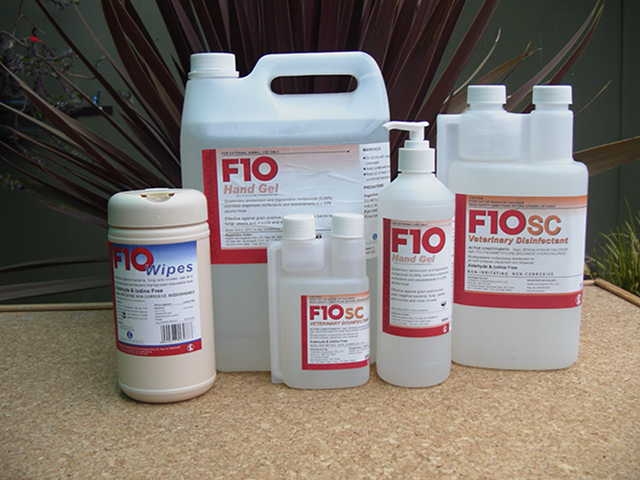
When you look at high level disinfectants, Virkon, Accel and F10 come out better than Trigene and Safe4 for example
Image Source

In some areas of a work place or at home, you can often get away with natural cleaners using baking soda and vinegar rather than something commercial. If you must use a commercial cleaner go back and look at the questions above.

Continually re-evaluate - maybe its an annual task to bring up the audit and check that all things are considered if new products are added. 

Set a goal at your home or workplace that the water leaves your house in the same state as it entered, but ideally better.  This makes you think about everything going down your drains and in some cases you might consider a filter system prior to it being released into the water system.  
Image source


Lets get some collaboration going

We at Otago Polytechnic School of Veterinary Nursing have set up a very rudimentary comparison of some common veterinary disinfectants.  You can all access this and edit it at this link. It needs more disinfectants adding and more of the blank spaces filling.  The more collaborators we have the better this comparison will be and the outcome will hopefully be that we all choose more sustainable disinfectants, leading to cost effective disease control, better safety for staff and less environmental contamination.  

Have a great week and we look forward to hearing about what you discover in your non veterinary cleaners and disinfectants and seeing some additions to the veterinary cleaners and disinfectants chart above too.  


Thursday, June 12, 2014

Unethical and Unsustainable or not?


After last weeks blog, we received a comment on our Facebook page from a veterinary nurse who was working in a practice that ticked all the boxes for a future focussed veterinary clinic. Well done to that practice!  I am hoping to be able to interview that veterinary nurse at some stage this year so watch this space.  If anyone else has got some stories to share, please let me know.  


A Boxer - a pedigree breed with a very long list of inherited diseases
Wikimedia commons
This week my blog is inspired by a conversation I had with a colleague over the sustainability and ethics of pedigree pets.  Remember, all pets have environmental impacts such as high carbon footprints from transportation of food or waste, in fact just one family Labrador Retriever has the same environmental impact as an SUV  If this topic interests you, this book would be worth a read.  But this time, we are talking about something different; the sustainability of producing pedigree pets that require a great deal of veterinary care to address inherited diseases. 

Breeding of many pedigree dogs focuses mainly on physical appearance such as short noses, wrinkled skin, broad shoulders, short legs, long ears and many others. Some of these physical attributes are not ideal for the pet and are linked to undesirable health complications such as luxating patellas. In addition, focusing on appearance rather than fitness has led to breeding animals that carry genetic predisposition for disease, just because they look especially nice. Boxers are a good example as they are highly predisposed to heart disease but because it often doesn't show up until breeding age, the animal may have already been bred and passed on the problem to a new generation. For those of you that wish to read more on this subject, there are many articles available online. Here are some examples:
1. Pedigree dog predisposition to cancer
2. Canine Inherited disorders database
3. Genetic diseases of cats

A Bulldog - this breed cant even give birth naturally due to the very narrow hips compared to the size of a puppies head.
Wikimedia commons

While there are breeders out there who do try to breed lines of pedigree dogs that are healthy and not predisposed to specific diseases, it is challenging to select for completely disease free lines without loosing the phenotypic (physical appearance) traits which are so important to the kennel club rules. In addition there are many unscrupulous breeders out there who will breed unfit dogs just to make money on selling offspring. Many prospective dog owners don't know exactly what to look for when choosing a pedigree breed.  

Hereditary conditions in pedigree pets, especially cats, dogs and rabbits, form the basis for a significant amount of profit in companion animal veterinary practice. Third eyelid flap surgery, total hip replacements, surgery to correct patella luxation, skin fold pyoderma treatment, dental surgery, heart disease management, cancer diagnosis, chemotherapy, inflammatory bowel disease diagnosis and treatment............the list goes on.  So many diseases have a genetic basis and are common in our pedigree dogs, with different breeds having predisposition to different sets of diseases. 
A Maltese - you rarely see one of these without at least a Grade 1 luxating patella identifiable at the puppy stage.
Wikimedia commons
So in summary the issues are: 
Social/Ethicalbreeding dogs that are fundamentally unsound that suffer more pain/illness than is necessary,  breeding these dogs and selling them to the public is socially and ethically unacceptable. 
Financial - increased financial burden on owners
Environmental - increased need for surgery and/or medications which create a large waste trail.  

So, as companion animal veterinarians and veterinary nurses, do we just accept the status quo and keep treating these dogs without taking action or do we take a more ethical and social approach and take some of the following actions:
  1. Educate clients on this issue, advise them away from pedigree pets but if they are going to choose a breed, help them choose a good breeder and a healthy pet. 
  2. Lobby kennel club and breeders to change breed standards to allow these diseases to be bred out.
  3. Work with genetic technology companies to develop tests to screen for the genes that carry specific diseases.
  4. Lobby for licensing of breeders, or as a profession set up a license system and market it well so that breeders want to be a licensed.  
Would this put veterinary clinics out of business?  If the businesses aren't future focussed, yes probably, but if they are future focussed and looking ahead at the drivers of change they will foresee that by being more social and ethical, clients will be more loyal to the business. In addition, a future focused business is focused on wellness and preventative medicine rather than just treating illness. How good would that be?

Have a great week